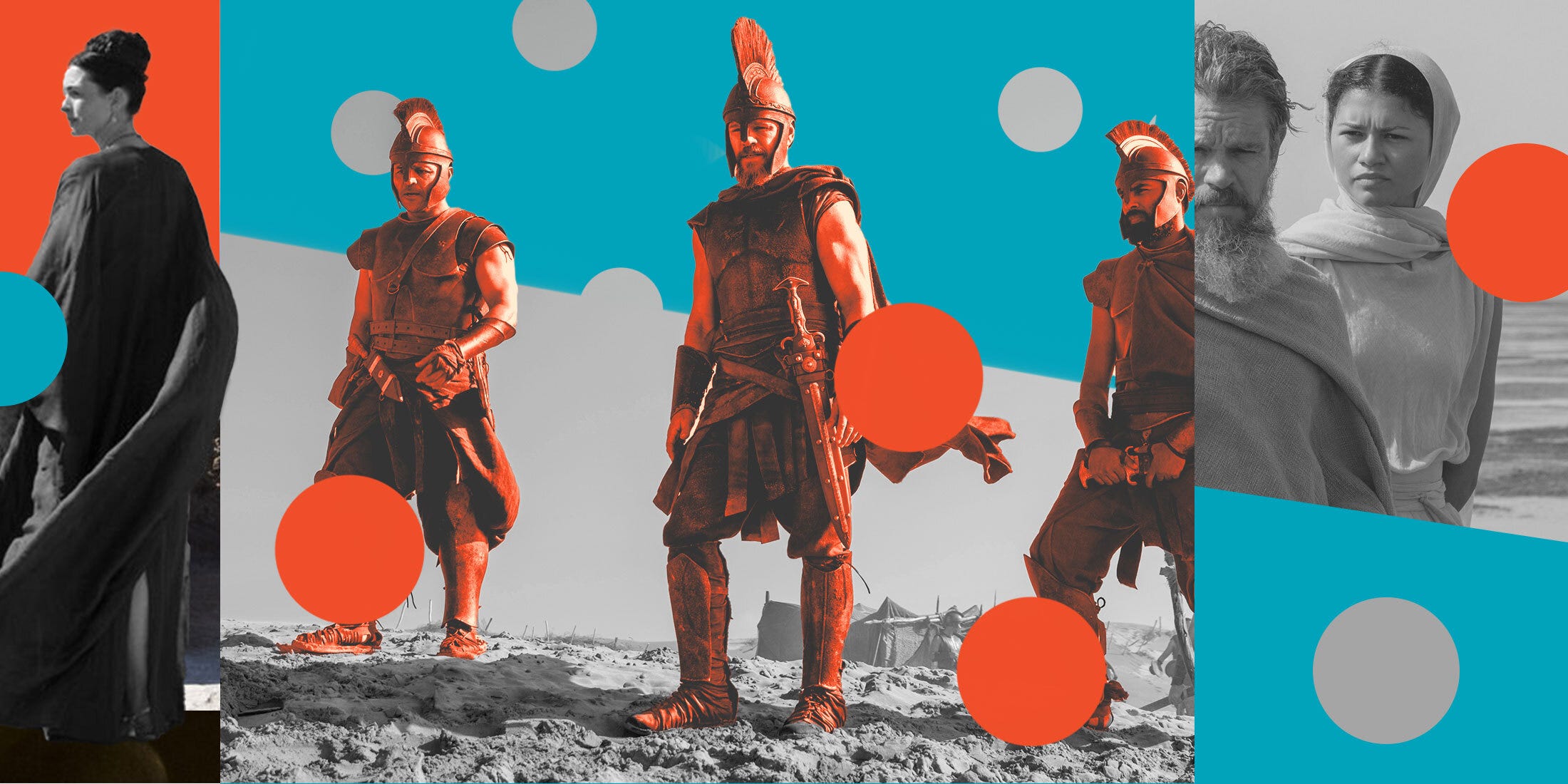

THE FIRST THING to know about Homer’s The Odyssey, as classic (and classical) as literature gets, is that it isn’t really text at all. The story, dating back to the 8th century BCE, comes down to us through an ancient oral tradition. It wouldn’t get a written version for a very, very long time, yet its power remains indelible. That, and its elemental tropes—the quest, heroism, monsters, sacrifice—are no doubt what drew Christopher Nolan to make his immense, innovative, IMAX-scaled, Matt Damon-starring blockbuster, in theaters starting on July 17.
But given that The Odyssey has been told and retold, interpreted and reinterpreted, so many times, what do we really know about the underlying mythology? (Yes, in spite of what some questionable folks on social media might tell you, The Odyssey is a myth, otherwise known as fiction, albeit one that historians generally agree is rooted in certain realities of the Bronze Age, including struggles resembling the Trojan War. Homer composed his enduring poem centuries later, and artifacts of the Bronze Age are rare. Also the cyclops, last time we checked, does not exist.)
So no, The Odyssey is not history. But it is historically significant, and Nolan is cunning in the ways he unspools the various twists and turns that have, for about 2,800 years now, captivated the public and held up a mirror to the way various cultures understand themselves. The Oppenheimer auteur was always up against a mountain of classicist thinking, including seminal translations of The Odyssey by E.V. Rieu, Robert Fagles, Emily Wilson, and recently, Daniel Mendelsohn.
But Nolan, based on a recent Time profile, seems more surprised by the current cultural feuding, including over whether it’s “woke” to cast Black and trans actors as part of his stacked ensemble. (Then again, did Achilles actually look like Brad Pitt in Troy? Does anyone look like Brad Pitt except Brad Pitt?) Or the particular boat architecture in the film—more hulking and Viking-like than smaller Mycenaean galleys, the critics say. Or, yes, the shading of a particular king’s armor.
Mendelsohn, for one, is amused by “all of these bros suddenly worrying about Greek literature,” the BBC reported.
That is, in part, because Homer’s The Odyssey has always been “woke”—or put another way, progressive, changing with the times, alive to how we decode its symbols. Here are elements of The Odyssey that have always been malleable (which tends to happen with oral poems lasting thousands of years), how scholars view them, and how Nolan shapes and reshapes their deeply visceral depiction in his film.
(By the way, the movie is a banger.)
About Those Accents

Tom Holland in The Odyssey.
What did ancient Greeks sound like? Was their accent European, or more Staten Island? Does it matter? Because they definitely weren’t speaking English.
Yes, Nolan opts for his actors (many of them British) to use a fairly neutral American-sounding tone. That was probably for consistency more than anything else. And, per Nolan himself, to showcase the intention behind the words—originally written in Homeric Greek, an ancient dialect that virtually no one speaks today. Intent on finding language that carries emotional rather than purely academic weight, Nolan made the deliberate choice to prioritize clarity and feeling over any attempt at period-accurate affectation.