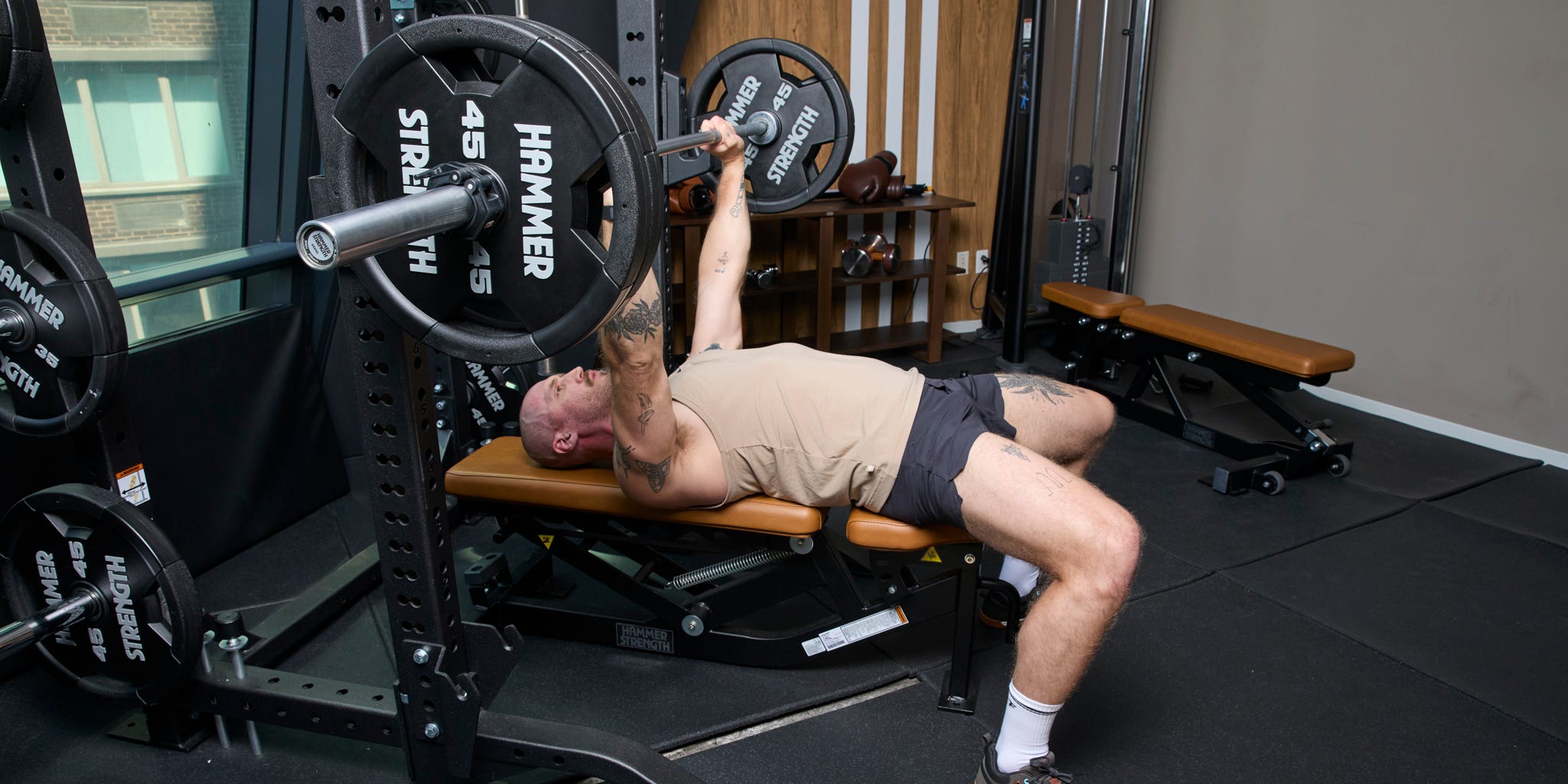

WHAT COMES TO mind when you think of someone who’s really fit? For most people, the end goal of their workouts has been one thing: how they look. The most obvious way to prove you’re serious about fitness has traditionally been to look the part.
But in recent years, the social media arms race to produce the most attention-grabbing content has created a different bar: when your feed is already filled with washboard abs and envy-inducing physiques, those admirable (and hard-earned) gains may not be enough to earn serious fitness clout. And in a world where you have more control over your appearance (partly because weight loss can now be aided by GLP-1s), looking fit is sometimes decoupled from hours spent grinding in the gym or dialing in your diet.
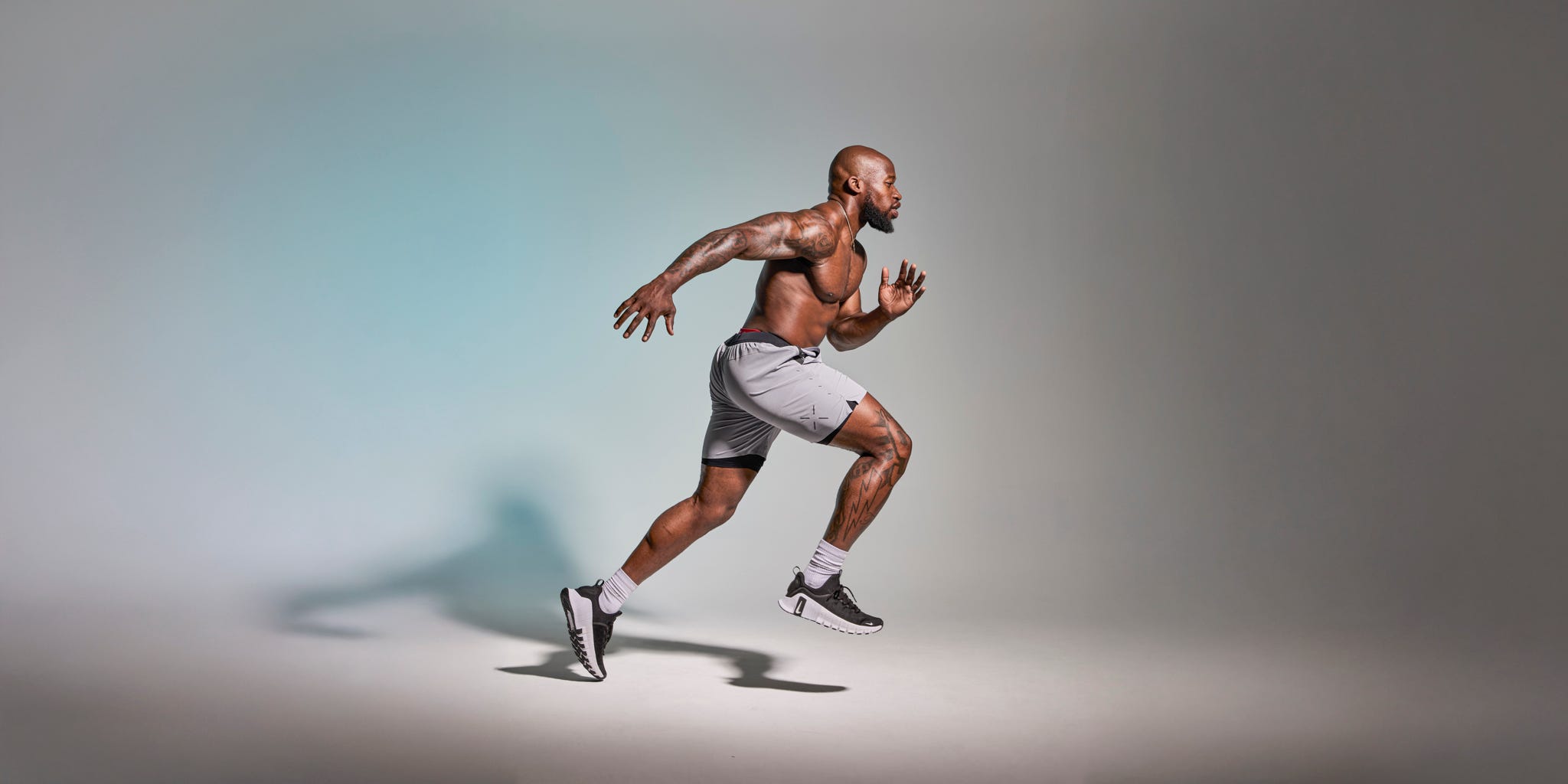
That’s opened the door for a new fitness status symbol: athleticism — the ability to combine physical qualities like strength, speed, power, agility, and coordination. Guys are now aiming to sprint faster, jump higher, and move more explosively, and they’re doing this largely for its own sake, not because they’re training for the basketball court or the football field.
In some cases, it seems to be about content: biohacking tech entrepreneur Bryan Johnson is attempting to dunk, an athletic feat that marries coordination, serious explosiveness, elite genetics, and years of technical skill development. In other instances, it’s simply about moving better: since retiring from bodybuilding, six-time Mr. Olympia Classic Physique champion Chris Bumstead has shifted his focus to athleticism, posting videos of 60-inch box jumps and treadmill sprints. But no matter the motivation, many fitness feeds are now filled with guys who can actually move.
None of this is new, of course. Anyone who played a college sport will be familiar with plyometrics and power development, and strength and conditioning coaches have been training with these principles in mind for decades. What is new is who’s doing it, how they’re broadcasting it, and, crucially, what’s missing — an actual sport that demands these specific physical attributes.
“For a long time, a lot of guys trained with one main goal — to build their body,” says DeVentri Jordan, a performance coach for elite athletes and NFL and NBA prospects and founder of GameFace Training. Now, he says, more guys are asking “what can I actually do with the body that I’ve built?”
The Social Media Effect
DYLAN SHANNON, a fitness content creator and RAW nutrition athlete, started posting on social media about two and a half years ago. His feed is filled with equal parts PR lifts, bounding drills, and max effort sprints. He does all this without looking like a stereotypical lean “athlete” — Shannon is built like a powerlifter. He says people often troll his sprinting videos, including one comment with a GIF of the Hulk sprinting. “I think one of the reasons I’ve seen some success is ‘cause I train this way,” he says. “People see that they can be both jacked and athletic.”
He’s certainly not the only one finding an audience for it. In the last two years, Shannon has noticed a “huge explosion” in athleticism-focused strength coaches and content-creator athletes on social media. Jason and Lauren Pak have amassed more than 1.5 million Instagram followers with an approach that emphasizes strength, mobility, and athletic movement, including videos encouraging people to “train mobility like an athlete.” Online coach Brad Becca racks up hundreds of thousands of views on videos demonstrating agility and explosiveness drills, while Bademba Doumbouya puts everyone from suburban moms to 60-year-old men through complex coordination drills that look like something a pro athlete might struggle with. These posts rack up views — but Jordan is quick to caution that just because something looks athletic on social media doesn’t mean it’ll actually help you become a better athlete.
The dominance of short-form video may also be driving the athleticism trend: if you only have a few seconds to capture someone’s attention, a display of raw power and speed is going to be more eye-catching than watching someone hammer out biceps curls or maintain their goal pace on a run. “Sprinting or dunking and lifting heavy weights — it looks cool on social media,” says Shannon. “It’s easy to sell it that way.”
Gyms Are Getting More Athletic, Too
BOUTIQUE AND BUDGET gyms alike are catering to — and often driving — the growing interest. Tone House, which regularly programs agility drills and sprinting, markets its classes to “unleash the inner athlete” in every New Yorker. No-frills East Coast chain PureGym recently remodeled some locations to allow room for more athletic training, swapping out rows of cardio machines for turf that gives aspiring athletes room to run and jump, along with equipment often associated with athletic training, such as Ski-ergs and weight sleds.
Juan Herrera-Perla, head coach of Hybrix XT classes at Life Time, says that more and more, their members are calling themselves “athletes,” elevating a trend that started back in the CrossFit era. “And they absolutely are,” he says. “When they go into a competition setting or when they come into a competitive class, they get a real taste of what being an athlete is.”
The rise of Hyrox has also opened the doors for a host of fitness competitions that bill themselves as testing grounds for athletic movement. Competitions like Life Time Games and ATHX ask participants to merge lifting basics, like a strict press, with conditioning moves like box jump overs or med ball shoulder tosses. Apex Athlete, a newer competition blending a 40-yard dash, vertical jump, trap-bar deadlift, and other NFL scouting combine-style tests, gives fitness enthusiasts the chance to measure their athleticism against standardized benchmarks — bringing what was once reserved for draft prospects to the everyday gym-goer.