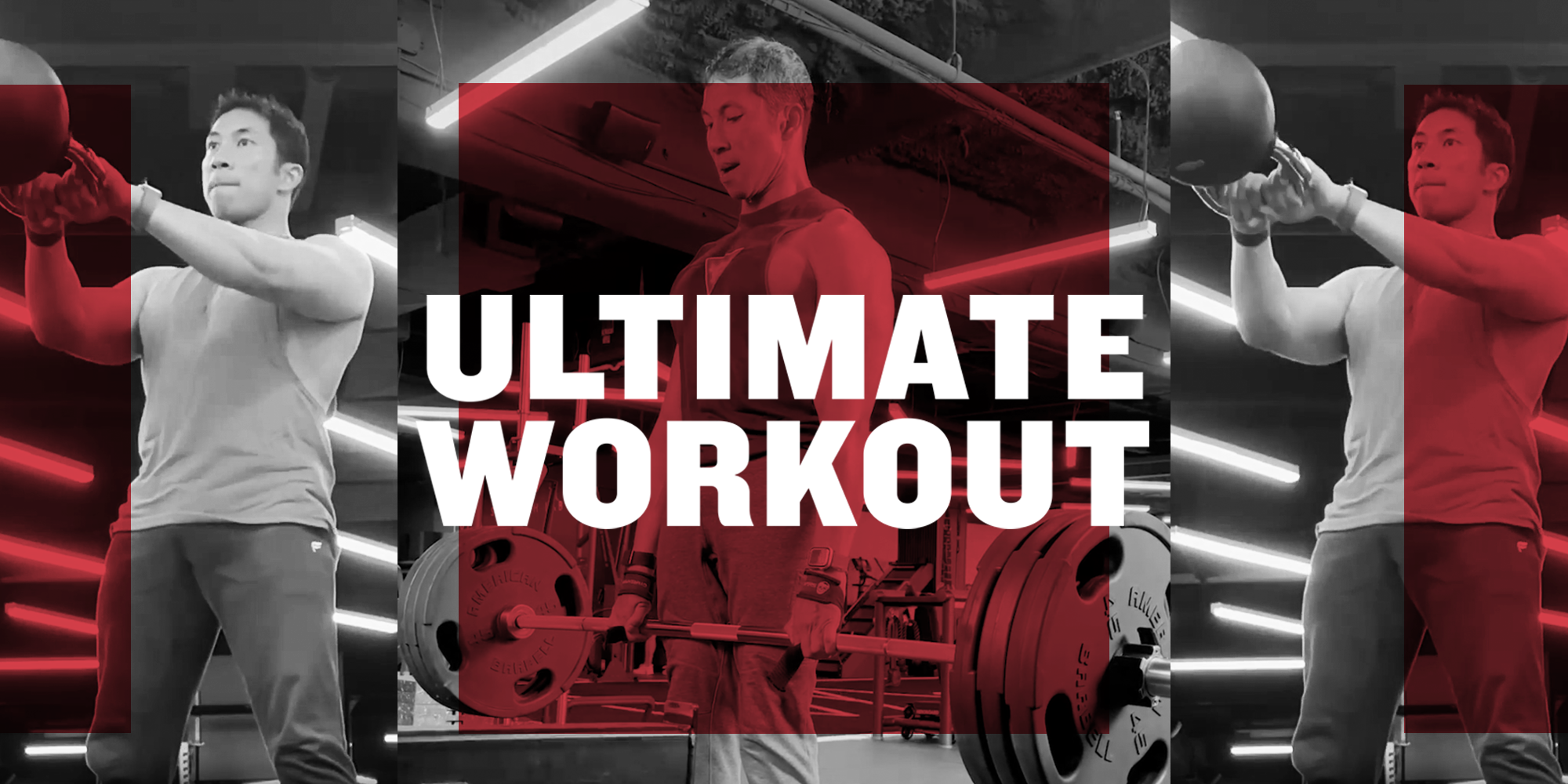
YOU WANT IT all: more muscle and less body fat without spending all day, every day in the gym. Like most guys, you probably have a job, kids, friends, and family that demand your time, and maybe even a hobby that doesn’t revolve around free weights and machines.
Changing your body requires discipline and consistency, but it doesn’t have to be an all-consuming pursuit. Despite what you’ve probably heard, you can build muscle and lose fat simultaneously. And you don’t need more than five hours a week to reach your physique goal. You just need to understand the principles of body recomposition.
Men’s Health Fitness Director Ebenezer Samuel, C.S.C.S. created a workout backed by scientific principles to help you get leaner, look bigger, and feel stronger. You’ll lift — hard — just four days per week, eat in a slight caloric deficit, and find ways to increase your physical activity outside of the gym.
What Is Body Recomposition?
BODY RECOMPOSITION IS when you simultaneously build muscle mass and lose body fat or build muscle while maintaining your body fat levels.
For example, a 190-pound man with 25 percent body fat carries 47.5 pounds of fat mass on his frame. If he builds five pounds of muscle and loses five pounds of fat over six months, he now weighs 195 pounds with 42.5 pounds of fat mass for a body fat percentage of 21 percent. Similarly, if he can gain 10 pounds of muscle while maintaining his fat levels, his body fat percentage drops to 23 percent. Both forms of body recomposition result in more muscle and a lower body fat percentage for a physique that looks bigger and leaner.
Recomp flies in the face of traditional fitness advice, which tells you to bulk (gain weight) and then cut (lose weight) to build lean muscle. The major caveats for a recomp period are that you won’t build as much muscle as you could during a traditional bulk phase or get as lean as quickly as you might during a dedicated cut — but you will skip the awkward in-between stages of bulking and cutting.
2 Keys to Successful Body Recomposition
Be In A Calorie Deficit
LOSING WEIGHT IS a numbers game. You can’t outsmart the laws of thermodynamics, so plan on eating in a caloric deficit to shed body fat during your recomp. The goal is to lose weight more slowly than on a traditional cut, so you have ample energy to push heavy weights and drive muscle growth. Plan to lose half a pound weekly, consuming 250 calories below your maintenance levels daily.
Your diet is the most crucial factor in getting into a caloric deficit. But Samuel says you can make the process easier by increasing your non-exercise activity thermogenesis (NEAT), defined as any movement that isn’t planned exercise.
“Think of your training and your cardio and your calorie burn as everything you’re doing in your life,” says Samuel. Here are a few simple suggestions that will increase your NEAT throughout the day to help you consistently burn more calories:
- Schedule a 30-minute walk each day.
- Skip the elevator and escalator — take the stairs instead.
- Consider moving Zoom meetings to phone calls and pacing while you talk to increase your step count.
- Add 5 to 7 minutes of intense cardio after your strength training workouts — what Samuel calls “cardio burst workouts.” You can do this on a rower, assault bike, or jump rope.
Focus on Progressive Overload
YOUR DIET DRIVES fat loss during a recomp; training is what stimulates hypertrophy (the development of new muscle tissue). There’s no way around it: you must train hard, lift as heavy as you can with good form, and push yourself to do either more reps or move more weight every session. Otherwise, you simply won’t get the result you’re after.
“It is possible to build muscle even while existing in a calorie deficit,” says Samuel. “You’re not going to wind up packing on 20 to 30 pounds of muscle on a body recomposition workout. However, we can get it done as long as we’re training smart and on a progressive overload program.”
Progressive overload is a systematic increase in your training frequency, volume, and intensity. Simply put: it’s when you lift the same weight for more reps, or perform more weight for the same reps week to week. Either way, you must do more each week on this program to ensure you’re building new muscle, especially when eating in a slight caloric deficit.
“If you’re training heavy enough and you’re progressing your lifts week after week after week, that data tells us you’re getting stronger,” Samuel explains. “Some of that is because you’re improving your technique and getting better at your lifts, but some of that is because you’re building muscle.”
The Ultimate Recomp Workout Plan
HOW TO WARM UP: The sets and reps listed for every exercise are for your working sets. Samuel recommends performing two to three warm-up sets of five increasingly heavy reps, all lighter than you’ll use for your working sets. “This is going to set you up to make the sets we list for you more productive, and it’s going to have you push during those sets,” Samuel says.
HOW TO PROGRESS: For your first exercise of each workout, increase the weight of your final set and lift it for fewer reps — refer to each exercise for specific instructions. For accessory movements, try increasing the weight you’re using for the same reps, or if you’re consistently hitting the bottom of the rep range, add another rep with the same weight to each set.
REST SMART: To build new muscle mass, you must push all your reps close to failure. Shorten your rest periods too much and you’ll be too fatigued to lift a meaningful load for the necessary reps. Rest too long and you’ll feel cold and stagnant. Pay attention to the prescribed rest times and adhere to them.
Day 1: Lower Body Workout 1
The first day focuses on lower body compound movements, anchored by the Romanian deadlift as the primary lift. Follow the warm-up and progression protocols above, keeping rest periods consistent throughout the session.
Day 2: Upper Body Workout 1
The first upper body session prioritizes pressing and pulling patterns to develop balanced strength and muscle across the chest, back, and shoulders.
Day 3: Lower Body Workout 2
The second lower body session introduces variation in movement patterns to target the quads, hamstrings, and glutes from different angles, reinforcing the progressive overload principle.
Day 4: Upper Body Workout 2
The second upper body session rounds out the weekly training split with additional volume for the back, arms, and shoulders, ensuring complete upper body development over the course of each training week.
By following this four-day split — pairing consistent progressive overload in the gym with a modest caloric deficit and increased daily movement — you give yourself the best possible conditions for body recomposition: building muscle, losing fat, and improving your overall physique without overhauling your entire life.