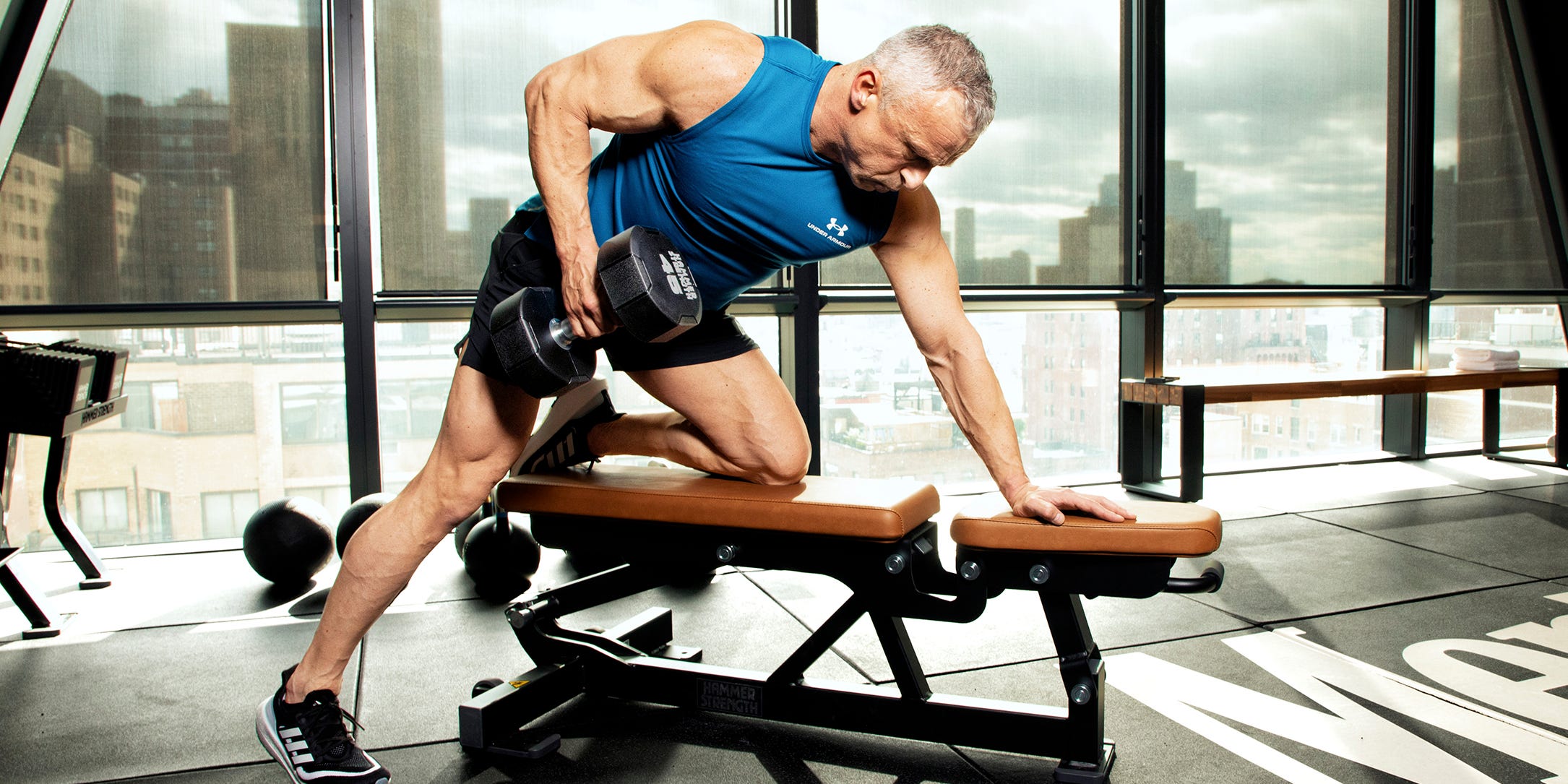

There are things in your life that will change as you age. That’s especially the case once you pass the half-century mark. After all the accumulated mileage of your 20s, 30s, and 40s — with the small nicks and scrapes that pile up over the years — those changes might mean you move a bit slower, or you don’t bounce back as quickly. This is totally normal. You might need to ease up on some aspects of your fitness practice, but you shouldn’t be discouraged. You don’t have to give up on your goals. You just need to reframe your approach, since you can still make gains after 50.
The key is to be smart — and smart training follows a plan for longevity. Trainer Bryan Krahn, C.S.C.S. is a veteran coach who knows what it takes to keep guys moving and healthy as they get older. He’s his own proof of concept: in his 50s himself, he uses the same principles in his own workouts.
Follow Krahn’s tips below to continue building muscle and strength into your sixth decade.
3 Tips for Training Success at 50 (and Beyond)
Reps, Not Weight
Lifting heavy can be a young man’s game. Krahn isn’t saying you should never pick up a big weight again — only that you can safeguard your joints by going lighter. You can still make gains this way, too. Studies suggest you can build muscle with higher rep ranges, up to 30 per set.
“Lighter weights will pack on size, as long as they make you work,” he says. “So aim to use a weight that will push you when you’re hitting 15 to 20 rep sets.”
Move Every Day
Krahn wants you to know that the myth of the fragile over-50 guy is a load of bunk. He says you should be doing more, if anything — not less. The key is that you shouldn’t be crushing yourself with every workout.
His advice: hit two or three hard training days per week. For the remainder of the time, stay active. Go on a run or walk, take a yoga class, or opt for your other favorite method of moving.
Be More Flexible
You can still train hard and make gains — but you need to remember that your body has accrued significant mileage, so there’s bound to be some wear and tear. You’ll have to make more adjustments to your routine than you did when you were younger to stay in the game, so don’t be afraid to shift your schedule as needed.
Be smart and listen to your body. Take days off when you need them, and don’t be afraid to swap out exercises when you’re not feeling 100 percent with a particular movement. Adapting your training to what your body needs on any given day is a strength, not a setback.