Do you remember how you ran and played as a kid?
Whether it was storming castle walls, avoiding lava pits, or cartwheeling down the sidewalk, there was no worry about sets, reps, or time-under-tension. It was just fun in the moment.
When was the last time working out felt like that?
For those who love strength training, exercise already feels this way — getting into the gym, crunching numbers, and focusing on technique can be totally absorbing and enjoyable. But for many people, exercise feels more like a chore than a hobby, more like an obligation than something to look forward to.
Here’s one way to change that.
An Alternative to Traditional Training
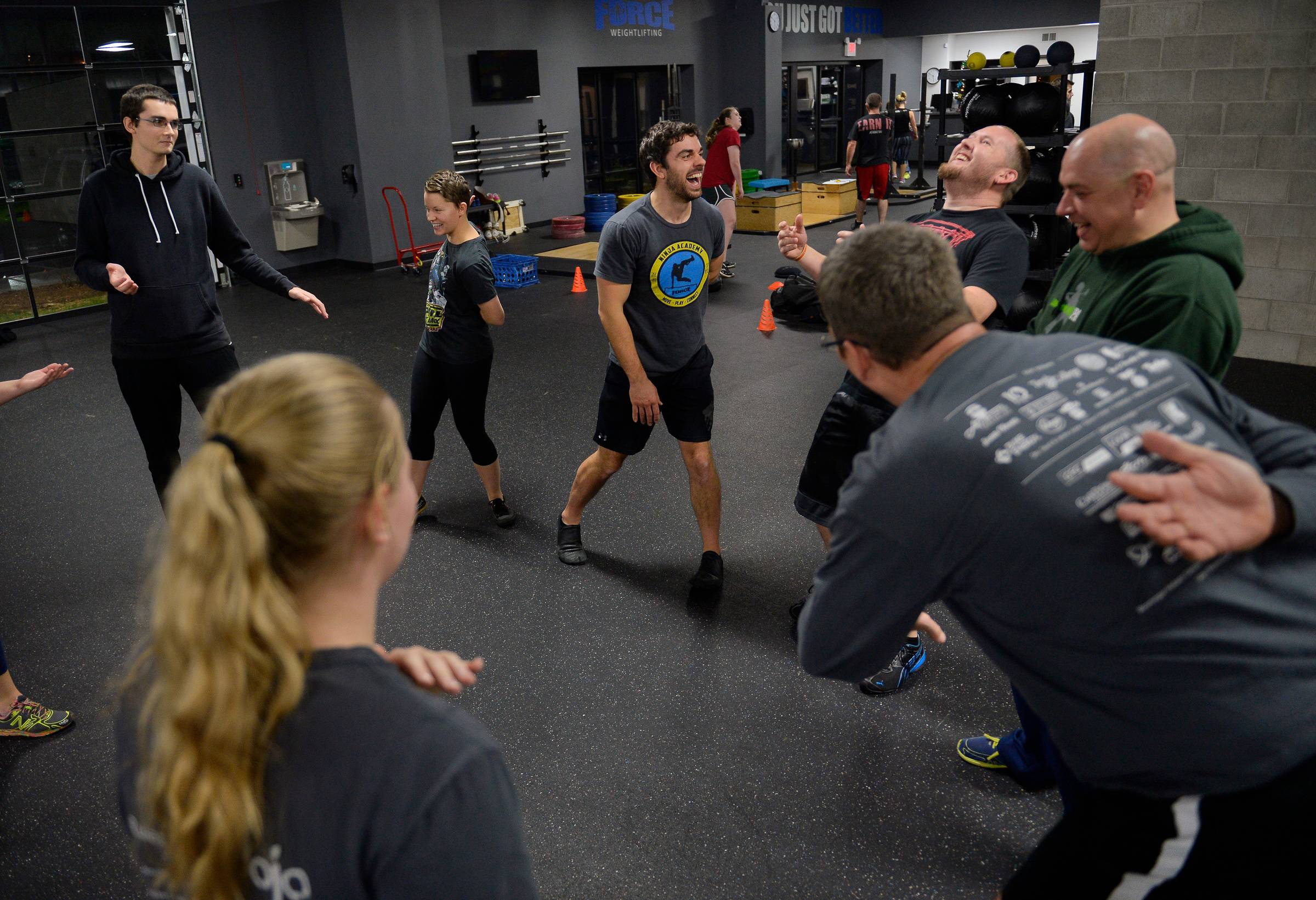
Years ago, a group fitness class called the “Ninja Academy” ran at a local gym. Twice a week, a group of adults would show up and spend an hour running around like 10-year-olds. They played tag, crawled on the floor, had lightsaber battles with foam swords, and played Zombie Dodgeball.
Nobody was focused on reps, heart rate, calories, or weights. And yet people were genuinely out of breath, laughing too hard to talk, and asking “can we do that again?”
The fitness industry tends to laser-focus on things that can be counted and tracked. That has naturally led to the idea that real exercise looks a certain way — and by extension, anything that can’t be easily tracked becomes less valuable.
That’s backwards.
When you’re playing, you move because you want to. You push yourself without thinking about it. You come back the next day not because you’re disciplined, but because it was genuinely fun.
Play doesn’t have to replace traditional training. It just gives you more options.
The benefits go beyond getting sweaty. Play builds community, keeps your brain engaged, introduces your body to movements it never gets in a gym, and promotes lifelong movement across all ages and generations.
Here’s what Christy — a mom of two teenage girls — said after her first Ninja Academy session:
“I took my twins to a class at my gym last night. Probably the only reason they agreed to go was because it’s called ‘Ninja Academy.’ It’s exercise, yes, but basically it’s structured recess for adults. We did silly stuff, like jump over a ‘creek’ (made out of jump ropes), did tripods or handstands depending on ability, played follow-the-leader (outside in the dark!), and just had a fun time.
The girls and I had a blast doing this together. They were still talking about it this morning. I’m on cloud 9 because it was just one of ‘those moments’ that can be hard to find. We just got to PLAY for a change. Not homework, not housework, not some dumb chore, just play. I don’t do that enough with my kids anymore. I’m going to try to fix that.”
A Few Principles Before You Start
- Everything is optional. Not feeling a game or activity? Try something else.
- Try your best no matter what. These movements and games take time to learn. When things are new, it’s easy to get frustrated. Focus on doing your best instead of being the best.
- Have fun, but don’t go too hard too fast. When you’re out of practice with playing, it’s easy to overdo it — jumping too far and taking a spill, getting a bit too aggressive in a game of tag. Ease in.
- The 70/30 rule. If you’re playing with someone else, adjust the rules so one person isn’t winning more than 70% of the time. Stronger player? Make them use their off hand. Taller player? Make them balance on one foot. Keep it competitive for everyone.
Games to Get You Started
🎯 Taps: Try to keep a foam ball or balloon in the air using kicks, hits, backheels — whatever it takes. Works solo against a wall or with a whole group. Bluey fans will recognize this as Keepy Uppy.
⚔️ Samurai Warrior: One person stands in front of a group and swipes their arm either up high or down low. High swipe means duck; low swipe means hop. If you get “hit,” take a step back, do 2 squats, and step back in. Just keep playing.
🏹 Zen Archer: Try to keep your feet planted while your partner slowly sweeps a hand or stick toward you in slow motion. Move out of the way at the last possible second with as little movement as needed. Harder than it sounds.
🪄 Stick Drop: Stand a broomstick upright, let it fall, and your partner tries to catch it right before it hits the ground. Start close, then move farther away as you improve.
💥 Crack-About Dodgeball: Free-for-all dodgeball, best played with foam Rhino-Skin dodgeballs. When you get hit, sit down. If a ball rolls to you, you can still throw it. When the person who hit you gets hit, you’re back in. No one is ever truly out, which keeps the fun going indefinitely.
🫳 Reaction Drop: Hold two balls at shoulder height and drop one at random. Your partner tries to catch it before it hits the ground. Deceptively hard and immediately addictive.
🥅 Goalies: Roll or toss a ball just at the edge of your partner’s reach and have them try to stop it. The goal is to find that edge so they succeed about 50% of the time. It’s also a game for practicing aim.
👑 King of the Log: Hold hands with a partner and try to make the other person take a step. Adjust the challenge by standing on a crack in the sidewalk, a small curb, or an actual log in the woods.
🔥 Floor is Lava: An all-time classic. You know the drill.
🧱 Jenga Balance: Stack two Jenga blocks on top of each other and try to hold the bottom one without letting the top one fall. Once comfortable, try adding slow-motion movement. A great focus game that is surprisingly challenging.
👻 Mario + Ghosts: One person walks around the space. When they turn to look, everyone freezes. The goal is to sneak up and tap them on the shoulder. (Also known as “The Weeping Angels” for Doctor Who fans.) This works with groups of any size and creates some genuinely memorable moments.
These games are a starting point for exploring movement in a new way — whether on your own, with a friend, or with family. More than anything, they’re a reminder that fitness doesn’t have to look any one particular way to count. What physical games do you love to play?