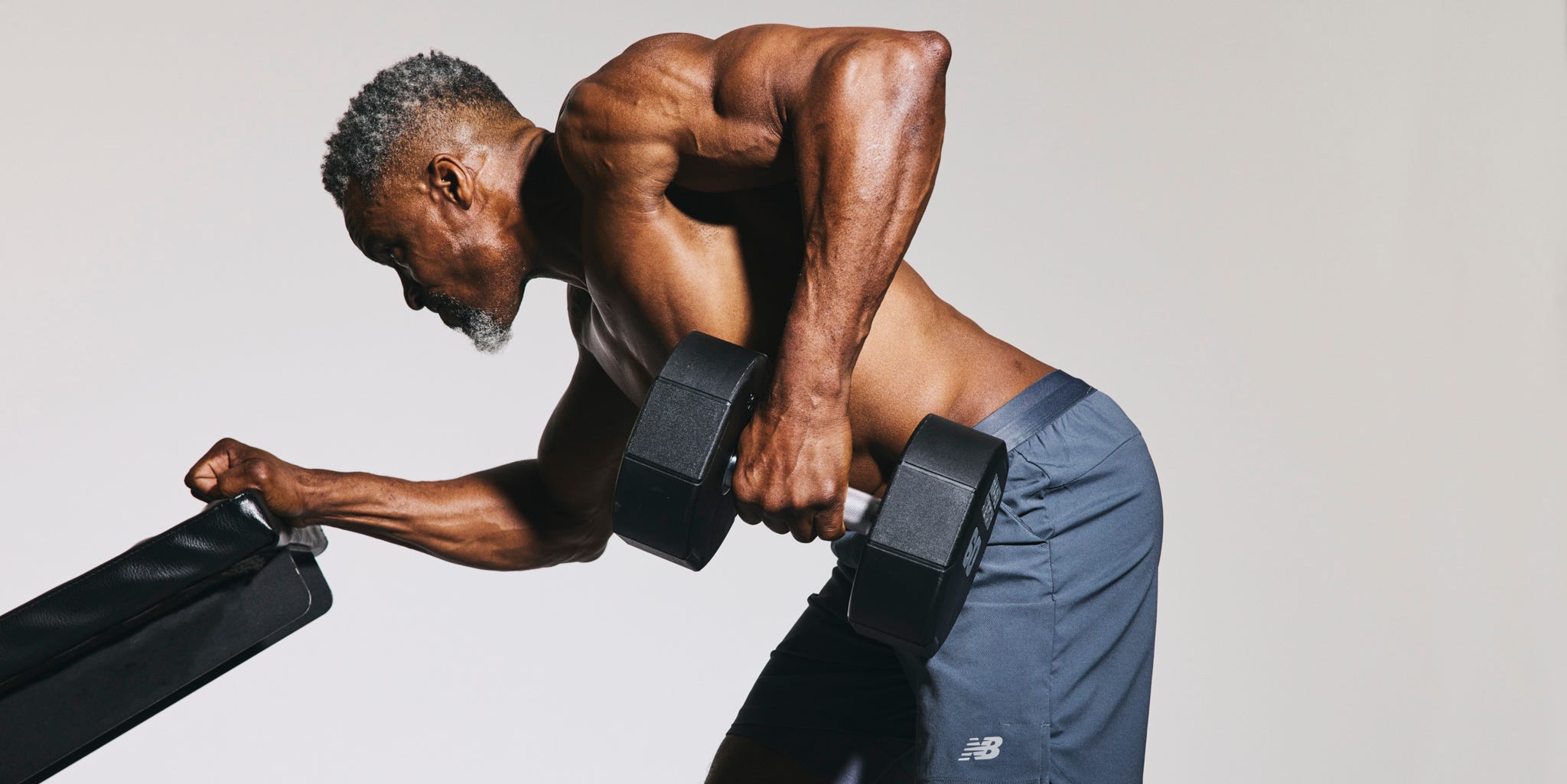
No, age isn’t just a number. But it’s not a harbinger of gym doom, either. Tweak your training smartly, and even if you’re nowhere near 50, you’ll feel strong as the years go on. Here’s your guide to eternal power.
Staying in shape gets harder as you age. But it’s certainly not impossible — and it’s a goal that more and more guys are chasing. Just think of the men in their 50s crushing Hyrox races and Ironman finish lines, and other guys in their 50s and 60s looking like 20-somethings. You know your potential: You can do more than just stay in shape as you age. You can thrive and make gains.
Older men continue to chase muscle. Witness Men’s Health cover guy Lenny Kravitz, who is north of 60 with abs that can still break Instagram. Or Hugh Jackman, still deadlifting like Wolverine. Or Jason Statham — yes, he’s well beyond 50, and still kicking ass.
Your own muscle quest can continue past the half-century mark, and we’ve found the elder-statesmen trainers who can show you how. Maybe you can’t endure hypertrophy hell anymore — but you’re not headed for Jazzercise and speed-walking, either.
“You don’t have to change everything you’re doing,” says former bodybuilder Bryan Krahn, C.S.C.S., the author of Men’s Health Muscle After 40 and creator of the Max Muscle at 50 program. “Just work smart.” Here’s how.
Step 1: Change Your Mindset
If you’re an older guy still approaching workouts as if you were in your 20s, you’re destined to fail. And if you’re young and already tired of tweaking joints and muscles, just you wait. Everyone can gain from making these four mental adjustments.

“I pay attention to little things. If I dial in sleep, stress, and nutrition I can continue to train at a high level.” — Bobby Maximus, trainer and author of Maximus Body
Dumbbells Are Your Friend
Barbell lifting is the gym gold standard, but it restricts your limbs from moving comfortably — and it’s overrated in your youth, too. As you age, consider ditching the barbell presses for dumbbell presses. As Krahn notes, your connective tissues lose elasticity over time, making the freedom of movement that dumbbells provide increasingly valuable.
Embrace Bodybuilding Moves
Total-body moves like cleans and squats are CrossFit mainstays, but bodybuilding-style isolation exercises like biceps curls should also be in your workouts. You’ll recover from these exercises more quickly than from heavy lifts, allowing you to train more often. Aim to do them twice a week.
Work Hard, Recover Harder
Your body can still recover from brutal workouts — with a little extra TLC. So double down on recovery time. Trainer Bobby Maximus, author of Maximus Body, says he hits the spa more than the gym since he’s gotten older. For every half hour in the gym, spend an hour foam rolling or doing easy yoga.
Set Limits on Your Training
An extra minute of burpees today isn’t worth not training tomorrow. “Your work capacity is starting to decline,” says Krahn, “along with your ability to recuperate.” Cap your sessions with a time limit — say, 45 minutes — or track total sets, such as 12 working sets and not a single one more.
Step 2: Identify the Real Enemy
The biggest threat to staying fit comes from inside your body. Sarcopenia, the age-related loss of skeletal muscle mass, erases 3 to 8 percent of your muscle mass each decade starting in your 30s. But you can fight back.
Build Power
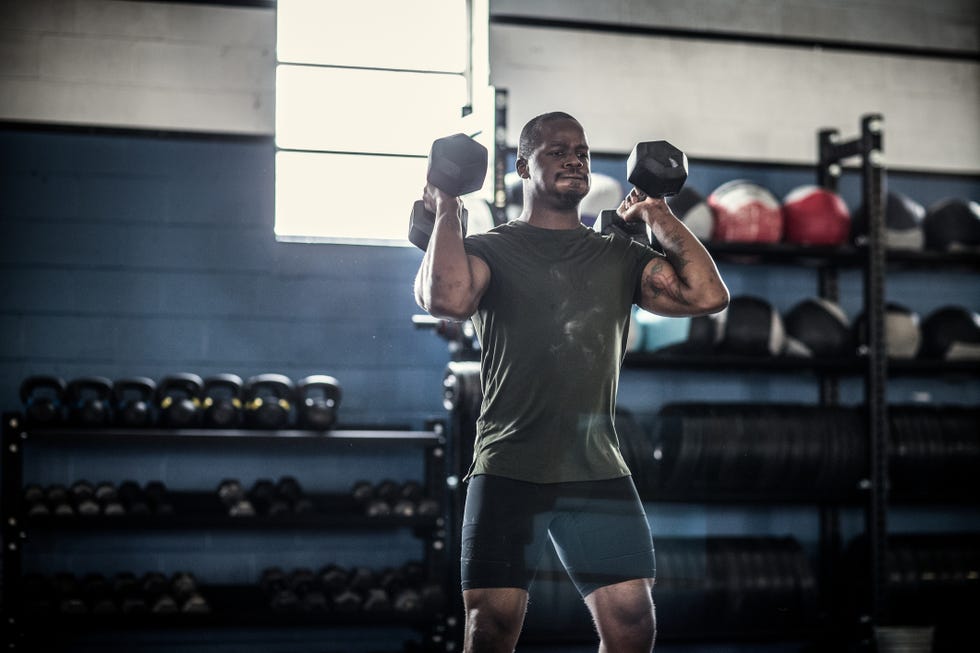
You don’t beat sarcopenia just by lifting weights to build strength, says Brad Schoenfeld, Ph.D., a veteran muscle researcher. You need to build a unique brand of strength: power.
Classic strength is your ability to lift, say, 20 pounds. Power is your ability to lift that same weight quickly. Build power training into your workouts twice weekly, using lighter weights. Do 3 sets of 6 reps, taking 2 seconds to lower the weight and no more than 1 second to accelerate it upward.
Eat for Muscle
Training breaks down your muscles, so you need protein to rebuild. Skip it and your muscles never fully recover.
Schoenfeld recommends consuming 35 to 40 grams of protein per meal — a protein shake or 4 to 6 ounces of meat both work well. “Most people,” he says, “simply don’t get sufficient protein intake.”
Step 3: Love the Little Things
The big, badass exercises like power cleans are fun, but it’s the smaller, less glamorous movements that keep you healthy and in the game long-term. Subtle exercises make a world of difference for injury prevention, superior conditioning, and maximum performance — and they’re worth building into every training phase as you age.
The bottom line: with the right mindset, the right movements, and the right recovery habits, men over 50 can continue building strength, adding muscle, and performing at a high level for years to come.