The first few minutes after getting out of bed can tell you a lot about your physical fitness. Do your knees feel stiff? Does it take a few extra steps before your body feels loose and ready to go? Do everyday movements feel a little slower than they once did? While these changes are common after 55, the good news is they’re not inevitable.
Starting in your 30s, you gradually begin losing muscle mass and strength at a rate of about 3 to 5 percent every 10 years through a process known as sarcopenia. According to research published in Age and Ageing, muscle loss accelerates with age and can affect everything from mobility and balance to metabolic health and independence. Recent studies show that consistent functional exercise can help improve strength, balance, mobility, and physical function in older adults. Fortunately, incorporating strength-based exercises on a consistent basis can help reverse this muscle loss and keep you thriving at 55 and beyond.
That’s why we spoke with James Bickerstaff, CPT, a personal trainer at OriGym, who shares a short, effective morning routine to help restore total-body strength after 55. “The key is choosing movements that challenge multiple muscle groups at once while remaining accessible and sustainable,” says Bickerstaff. “Your morning routine should place a greater focus on waking the body up rather than heavy intensity.”
The following five exercises are designed to deliver a full-body workout in eight minutes flat.
Bodyweight Squats
Few exercises deliver more total-body benefits than the squat. By working your glutes, quads, and core all at once, squats help maintain your lower body strength, which research says is essential for standing, walking, climbing stairs, and getting up from chairs.
“It’s important to strengthen the lower body muscles as we age,” explains Bickerstaff. “Bodyweight squats also improve your mobility in your knees and hips.”
How to do it:
- Stand with your feet shoulder-width apart.
- Engage your core and keep your chest lifted.
- Push your hips backward as if sitting into a chair.
- Bend your knees and lower your body comfortably.
- Keep your weight distributed through your heels.
- Lower only as far as your mobility allows.
- Pause for one to two seconds at the bottom position.
- Drive through your heels to stand back up.
- Repeat for two to three sets of eight to 12 reps, resting for 45 to 60 seconds between sets.
Wall Push-ups
Upper body strength often declines with age, especially in your chest, shoulders, and arms. Wall push-ups provide a joint-friendly way to maintain pushing strength without stressing your joints or requiring you to get down on the floor.
How to do it:
- Stand facing a wall.
- Place your hands on the wall at chest height.
- Position your hands slightly wider than shoulder-width apart.
- Walk your feet back until your body forms a straight line.
- Bend your elbows and slowly bring your chest toward the wall.
- Keep your core engaged throughout the movement.
- Pause for one to two seconds near the wall.
- Push through your palms to return to the starting position.
- Perform two to three sets of 8 to 15 reps, resting for 45 to 60 seconds between sets.
Glute Bridges
Sitting for long stretches can reduce glute activation, resulting in poor posture, lower back discomfort, and poor walking mechanics. Glute bridges help reverse that pattern by targeting the muscles responsible for hip extension and stability.
How to do it:
- Lie on your back with your knees bent.
- Place your feet flat on the floor about hip-width apart.
- Rest your arms comfortably at your sides.
- Flex your core before beginning the movement.
- Press through your heels.
- Lift your hips until your body forms a straight line from shoulders to knees.
- Squeeze your glutes for one to two seconds at the top.
- Lower back down slowly with control.
- Complete two to three sets of six to 10 reps, resting for 45 to 60 seconds between sets.
Standing Calf Raises
Strong calves help generate push-off power while reducing your risk of trips and falls, which is essential for healthy aging. “Calf raises are excellent for strengthening your lower legs, while also improving ankle stability and mobility,” explains Bickerstaff.
How to do it:
- Stand tall with your feet hip-width apart.
- Hold onto a chair or wall if additional support is needed.
- Engage your core and maintain good upright posture.
- Slowly rise onto the balls of your feet.
- Lift your heels as high as possible.
- Pause for one to two seconds at the top of the movement.
- Lower your heels slowly back to the floor.
- Aim for two to three sets of 12 to 20 reps, resting for 45 to 60 seconds between sets.
Marching in Place
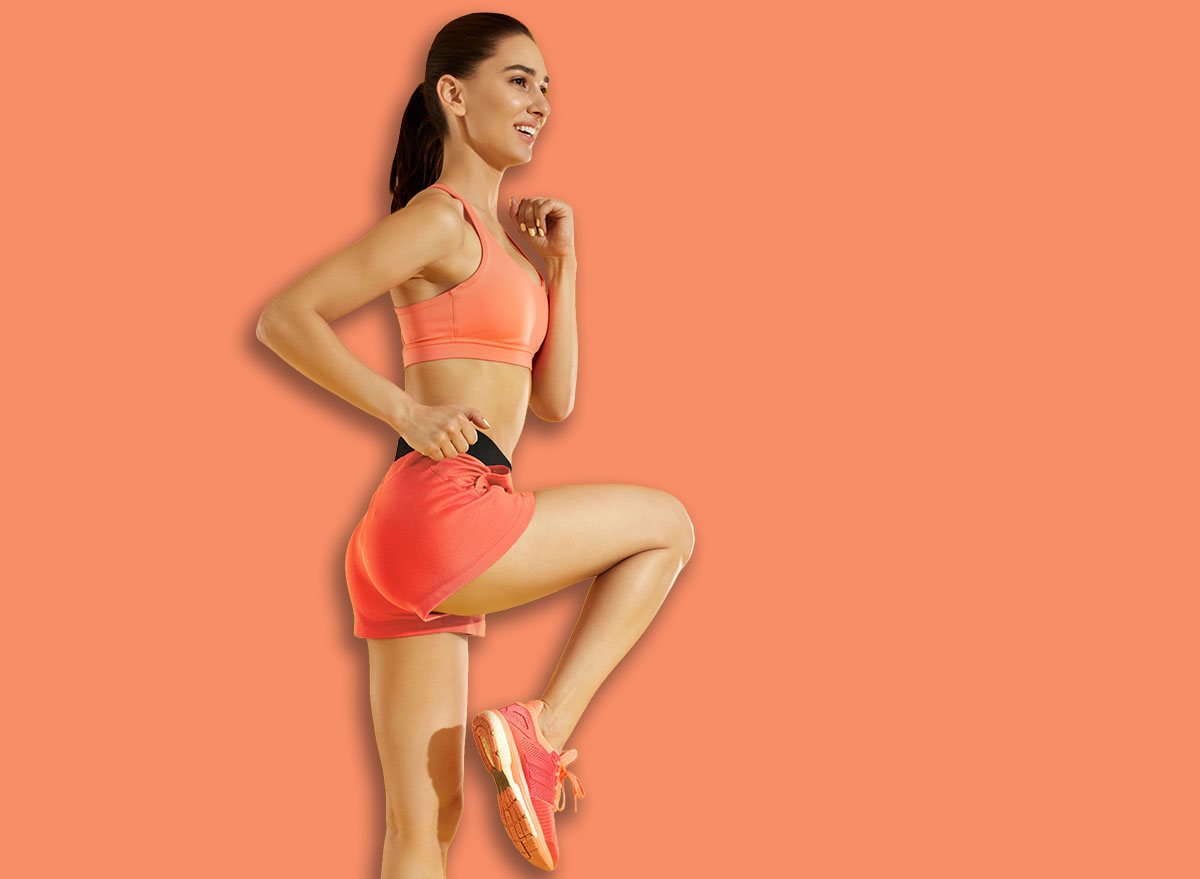
Marching in place activates your hip flexors and core while encouraging coordination between your upper and lower body. “This basic exercise can raise your heart rate, reinforce your balance, and help start your day feeling more energized,” says Bickerstaff.
How to do it:
- Stand tall with your feet hip-width apart.
- Engage your core and maintain upright posture.
- Lift one knee toward hip height.
- Lower your leg with control.
- Repeat with your opposite leg.
- Swing your arms naturally as you march.
- Maintain a steady rhythm.
- Perform two to three rounds lasting 30 to 60 seconds, resting for 45 to 60 seconds between rounds.
Together, these five exercises form a practical, time-efficient morning routine that supports strength, balance, and mobility — the building blocks of staying active and independent well into your later years.